
You know that feeling when you read a book at exactly the right time? I had this recently with Barry Hines’ A Kestrel for a Knave. I’d been meaning to read it for a while, but something had prevented me picking it up. That is until recently, after temporarily living with my mum, where I found myself in a landscape similar to that of the book’s protagonist Billy Caspar.
The novel follows Caspar as he navigates scenery replete with signs of both intense wildlife and industry, oscillating between the two and blending them in a perfect depiction of what it means to be a working class person near countryside. Hines frequently frames the landscape in the labour done near and upon it. Sky darkens to a “charcoal”, the colour of sorrel is “rust”, a droplet of water moves “like mercury”. There’s a surprising harmony awarded by that, as a link between the oppression of the land and the oppression of the worker through the production of fossil fuels.

Fast forward to 2025, a time when most of the country’s pits are closed. The signs of these edgelands, bordered by mainly working class communities, still teem with wildlife and thrive. I moved back to Thornton to Mum’s new council flat, minutes away from Rimrose Valley Country Park. I noticed the kestrels first, their presence conjuring images of Hines’s novel and the famous Ken Loach’s film adaptation, Kes. I visited Rimrose as a child, but couldn’t believe that somewhere so close, so proximal to the urban and domestic, could be dense with creatures I associated with landscapes we’d describe as untouched or undisturbed.
Here, in the middle of several estates, stretching across Sefton, there were more concentrated species than in any of the places I’d recently been. Rimrose Valley Country Park wasn’t always a park. It didn’t always bear the name “valley”; it existed for the longest time as a waste ground – “the piggery” until 1978. The year before I was born, 1993, saw the beginning of its restoration and it became a place to visit, walk, and birdwatch for the first time in decades.
It’s over 200 acres, with the Leeds-Liverpool canal running along its easterly edge. Part of its appeal is that it’s not really a park. It contradicts itself: it’s wild but not unkempt, both orderly and chaotic.

In Common Ground, Rob Cowen describes these places as “wide” seams, “exotic kingdoms possessing a kind of condensed wildness precisely because of their proximity to the civilised”. It’s because these edges are such a ready meeting point that they’re a vital, but often ignored, part of the conversation about conservation, rewilding, and how we coexist with other species. Those in the social housing that border Rimrose are already doing it, meeting each other on a green border with mutuality.
Much like Hines’s industrial similes, I started to read the environment through its dog walkers, through kids going to school. Cataloguing bird song into relatable metaphors, the hovering of a kestrel became a drone, the Whitethroat and Blackcap’s song a droid from Star Wars, buzzards mobiles above a baby’s crib. Language I had previously dismissed as anthropocentric transformed into a classification of these blurred meeting points between humans and other species, the town and the country.
The best moments on Rimrose are the hours where the space feels like a secret. It’s a brief inhale before the human noise of the day starts. The trills of songbirds are underscored by the metallic jingles of an ice cream van or someone’s distant laugh.
When his English teacher marvels at the kestrel’s gentleness with Caspar, the boy explains that it’s “cos she thinks I’m not bothered”. It’s the indifference of the wildness around him that is what he understands so acutely: “It’s fierce, an’ it’s wild, an’ it’s not bothered about anybody, not even about me right. And that’s why it’s great.”

This indifference is positive and empowering in a way that a human one can’t be, acting as a counterpart to the ignorance of the political system. This relationship between Caspar and the kestrel – complicated by Caspar’s training of the bird – is the most horizontal in the novel. Caspar isn’t ignored or punished by the bird, they have a gentle acceptance of one another.
I expected to be met with a similar comforting indifference on my return to Rimrose. I assumed the sadness I was feeling would pale in comparison to the sublimity of the environment. Instead, it felt bigger somehow, more tangible, and part of a larger emotional landscape.
Arriving on Rimrose in the morning kickstarted my emotional metabolism for the day. Bathing my face in lemon yellow light of a just-risen sun, hearing the calls of birds, seeing a kestrel fluttering above ground, stemmed a numbness before it could take hold.
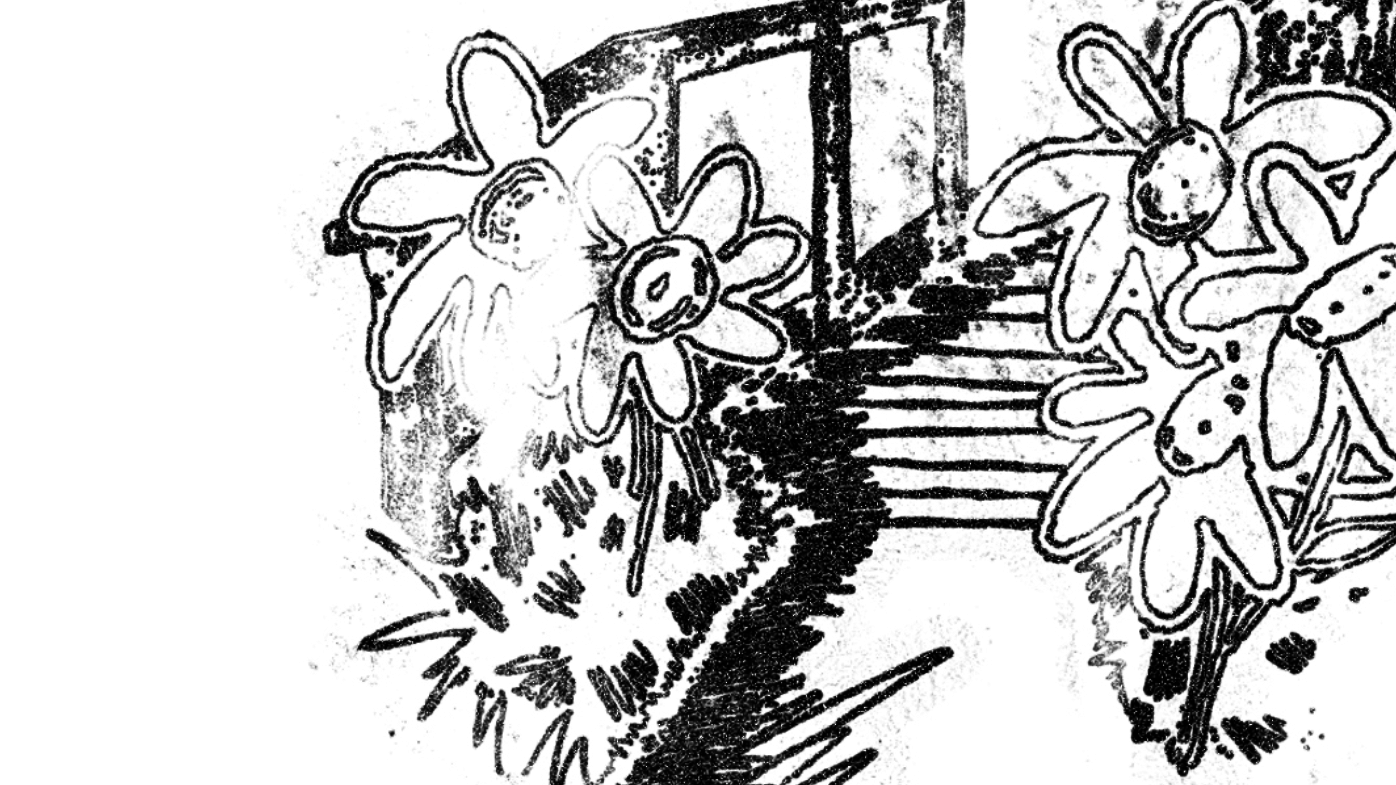
all illustrations by Phoebe Verity
You must be logged in to post a comment.