
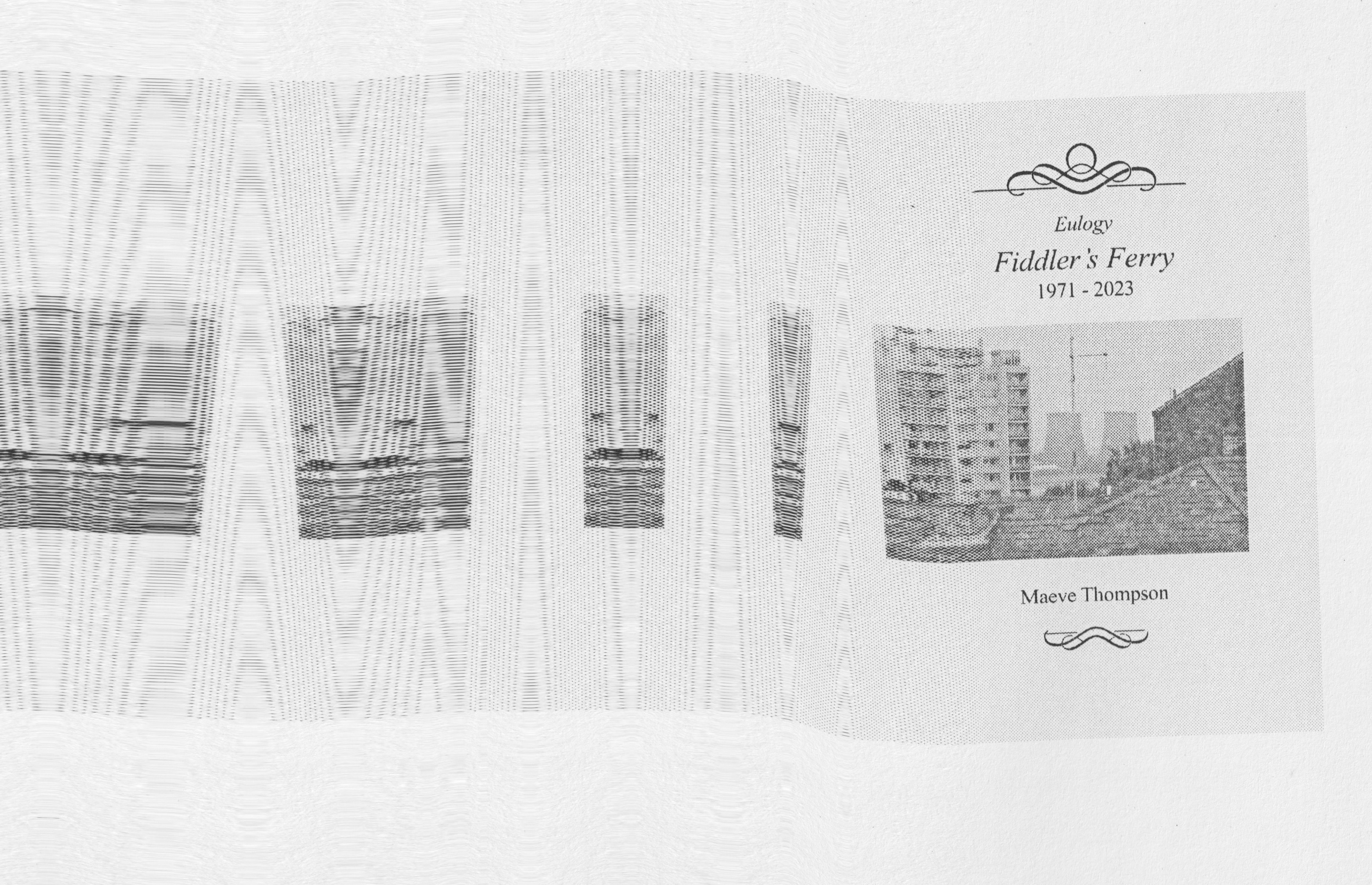
Note to reader:
Fiddler’s Ferry power station is a, now decommissioned, coal-fired power station in Warrington. 4 out of 8 of its cooling towers were demolished on the morning of December 3rd, 2023.
A dawn painted in grey cast over the North West of England, where hedgerows meet steelworks. Four of us crossing over potholes and treading the puddles slick with petrol. The December sleet of a brand new day sat nestled, frozen, and caught, there between cracks in gravel set flat underneath rubber tyres of heavy goods vehicles carrying their freight. A morning spent in the edge lands, and a surface wet to the soles of shoes, seeping through leather and the woollen socks laced inside. Hundreds stood as one in that lay-by down the second side road on the left. Should we have stood there any longer I am certain would we have grown roots, germinating and sharing secrets from or toes with the saplings tangled in fences wearing their emerald anti-vandal armour. I stained my school skirt with the same paint as a child, weaving in and out of the gates facing Woolton Road at break time. I was around the same age when I would have seen the charcoal sandcastles for the first time, eight guardians stood tall over the horses and livestock grazing below. The glass of the window in the back seat of my parents car was cold against my chin, as my tiny eyes examined the silhouette of an industry, shapes carved in sodium street-lamp amber. At 18 I found myself peering out all the same, dreaming from the slow train on the raised bank between Sankey and Widnes. It is a journey I still make, often undertaking my own pilgrimage across that length of land between one home and the other. As a landmark it was inherited, and as a staging post it functioned; the concrete casts marking that I was half of the way there.
The evacuation alarm sang four of the towers their last rites, a fate decided and sounding out — to be returned to him who formed them, from the very dust of the earth. It had been the first snow the evening before and from the bathroom window I saw torn cotton falling from midnight’s sky. I held my arm out of the gap one storey up, catching clustered snowflakes in a pink palm. Now morning, and twenty miles west, a single blow pushed the weight of 60 years against my chest, as four concrete figures folded and fell to the silky mist of a winter’s morning. I imagined myself catching these fragments the colour of dulled sliver in my palms all the same, holding the traces of a recent past, and a reluctant future in a pair of tight fists. An architectural constant dissolved to collective memory in a single minute; a site set for regeneration, three bedroom new-build houses built on the grave of a coal-powered deity decommissioned, and now canonised. Reformation echoes across the nation, as the hinterlands of the North West of England steadily inherit more of the same shapes, fulfilment centres, and new-build estates. It is difficult to ignore the threat symptomatic of this re-modelling, regional communities now failing to see an account of their autonomy and history reflected in their own territories. The new age of clean energy complicated by these cultural consequences, widespread decommissioning comes an amputation of identity, places once synonymous with their steelworks and collieries left vacant. I am under no impression that Fiddler’s Ferry could have anticipated a future as a population of refurbished luxury flats, or Stanlow Oil Refinery will eventually expect a fate as a shopping and leisure destination completed with a brand new tube station, I am left to envy the distinction between landmark and eyesore.
These sites exist as a measure of history for the generations and classes unable to rely on written accounts of ancestry, my great-grandfather having worked as a builder on the site after the docks suffered their first blows, a story to be found across Liverpool and a heritage present in Merseyside amongst most. Stood underneath the cold heat of an electric shower the afternoon following the demolition the soot of these three generations mixed with the soap between my toes and led a procession towards the drain. Although clean, remaining between my fingernails was be the testament to how things used to be, 15 miles outside of where I grew up.