
When I worked in MediaCity, it always felt a bit odd that there were hardly any pigeons knocking about. There were surely enough crumbs left by office workers eating lunch away from their cubicles to attract them – and plenty of nooks and crannies in the buildings for them to nest in. I asked around. I heard whispers that no pigeons was no accident. I was told that, amongst the steel and glass modernist high-rises, there’s a mercenary hired by the landowners to kill the rock dove descendants. If true, it might say a lot about the true nature of this place. A month after I finished working there, I went back to try and find out where they all are.
MediaCityUK is a place of contradictions. It’s presented, in its own marketing copy, as a “Place to Breathe.” Funny then, that data supplied by Imperial College suggests that the air in MediaCity exceeds three limits set out by the WHO. It’s also described as a “Place to Create” and a “Place to Innovate.” It’s also a private development part-owned by Peel Holdings, a conglomerate with a labyrinthine accounting structure of hundreds of different companies, with a parent registered in the Isle of Man.
There’s the discord, then. We’re told it’s a crafted garden of abundant inspiration, but hidden behind this abstraction is the place itself: a concrete and steel amalgam of denied possibilities. Walking round, it’s hard to see anything truly creative. There’s no messiness, no sense of organic potentiality, no true public space. There are no pigeons. There is plenty of order though. Blocky securitised buildings reeking of efficiency, people in heavy jackets and boots with walkie-talkies, people cleaning pavements with jet washers.

The clash between creativity and order dovetails at the expense of the pigeons. Pigeons have been used by humans as messengers and spies during wars for centuries, as well as symbols of peace and love. The term ‘dove’ was even used to refer to anti-war federalists in 19th century America – the group wanting to abolish slavery and provide a space for women in politics. Doves challenged the established order of things.
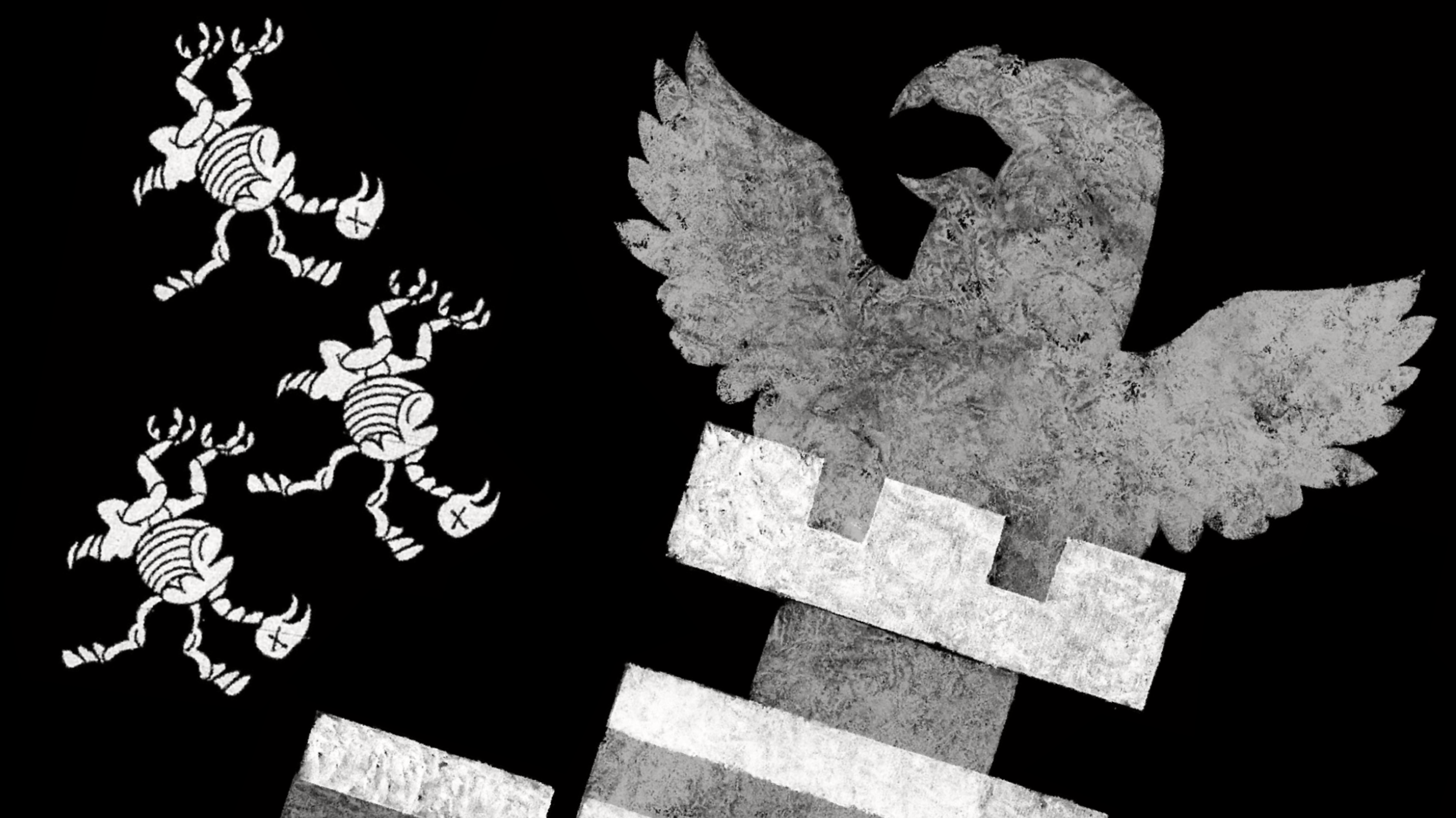
The antagonists of the anti-war Doves back then were the Hawks. Hawks were pro-war republicans serving powerful elites, charged with keeping the doves in check. This antagonism between hawks and the establishment goes back even further than the 19th century, too. Hawks were used by medieval nobility to hunt game for fun and food in a sport known as hawking. This sport is even referenced in the Bayeux Tapestry, on which a hawk is shown being released by a grinning Anglo-Saxon king.
Hawks and doves have a rich history, then: hawks as tools of the elites to hunt, control and order; doves as frontline workers and anti- war, anti-establishment symbols of peace and love. MediaCity is another instalment in that history. In the roof of one of the buildings here, built on the banks of imperial infrastructure, nests a hawk – our mercenary for hire. Purposefully nested by the landowners, the hawk is tasked with controlling the population of pigeons daring to loiter. I’m even told that if you get down there early enough, you can see pigeon bones left on the grey concrete at pale dawn, regurgitated by a sated agent.

There are no discarded carcasses as I’m walking around MediaCity. But there are other totems of ordered creativity and failed public space dotted about. Granite planters remind people not to sit on them. Monochrome signs broadcast that this is, in fact, private land. Fintech platforms sponsor the hireable electric bikes. The open “public” square is overlooked by giant Peel logos and a large television screen running PR and brand campaigns.
Maybe this is what is meant by creativity. Brand activations, content, clicks, productivity. The type of creativity offered by the establishment media based here. The type of creativity that makes money. In an era where the majority of us provide mental labour rather than physical labour, it’s the type of creativity often dangled by canny managers who want to eke out a bit more value from our brains. But this is a mixed-use development. Even if you don’t work here, there should be enough going on for visitors.
Well, the creative and innovative (remember, their own words) food and drink options at MediaCity comprise Prezzo, Wagamama, and Pret a Manger. A Prezzo. A Wagamama. And a Pret. With a handful of expensive craft beer and cocktail bars, this is no different than any city centre in the country. Countering all this homogeneity though, is a patch of grass surrounded by street food, bars, and free-to-use deck chairs. I had lunch here with my mum before taking her to the Corrie tour over the way last summer, which was pleasant enough. Although, this isn’t a park, or even public land, so if you were to gravitate here with some mates and a bag of cans, I’m not sure how long you’d last until the on-site security ask you to move it on.

This designated leisure patch was closed when I was walking around. The Blue Peter garden next to it was open, mind, and it was here that I recorded some sounds of birds over the ever- present whir of trams. I even saw a collared dove – a cousin of our pigeon – in one of the trees. But collared doves are the pigeon’s more suburban relative. They’re a commuter that nests in trees rather than gaps in urban concrete and metal. Collared doves are seen in twos, not in the droves that free-associating pigeons mill about in.
The only pigeon of the day was spotted not by me, but by college students that approached me as I was pointing a microphone into a tree. They were here asking people their thoughts on MediaCity for TikTok, with all three feeling ambivalent about the place themselves. Their college has a relationship with MediaCity, but they feel it’s all bluster. And while older people I’ve spoken to said the area’s an improvement – “your car would’ve been nicked at a red light driving through the quays before all this,” one tells me – an area can be improved to the point of sanitisation.

And it is sanitised. You’re allowed to socialise if you sit in the designated areas, as long as you spend money on site. You’re allowed to be creative if it increases value for management and the landowners. You’re allowed to work here, but the profit you make is theirs. If you’re a pigeon, they have a hawk to kill you. That’s the order of things.
During this interlude of free association with the college students, this order was broken. One of them spotted a pigeon landing along the strip of chain restaurants. With the hawk up on a roof tasked with keeping order, this sighting of a pigeon felt like a symbol of disorder. A small victory in the battle for space here that’s ultimately a battle between public and private, creativity and commerce, or doves and hawks.
The solitary pigeon hobbled over to Pret, stopped at the door for a couple of seconds, and then flew away. I wondered if the pigeon worked out that crumbs from the table weren’t worth the hassle from a hawk, or whether it remembered that Stirling Foods in Salford Precinct, where a load of other pigeons hang out, has a better lunch deal?
You must be logged in to post a comment.