
After a confusing delay at Warrington Interchange where the hourly bus disappeared from the board, I was on the number five to Lymm. Trundling past opulent showrooms, a boarded-up Conservative Party office, and JW Lees pubs, town gradually dissolved into country.
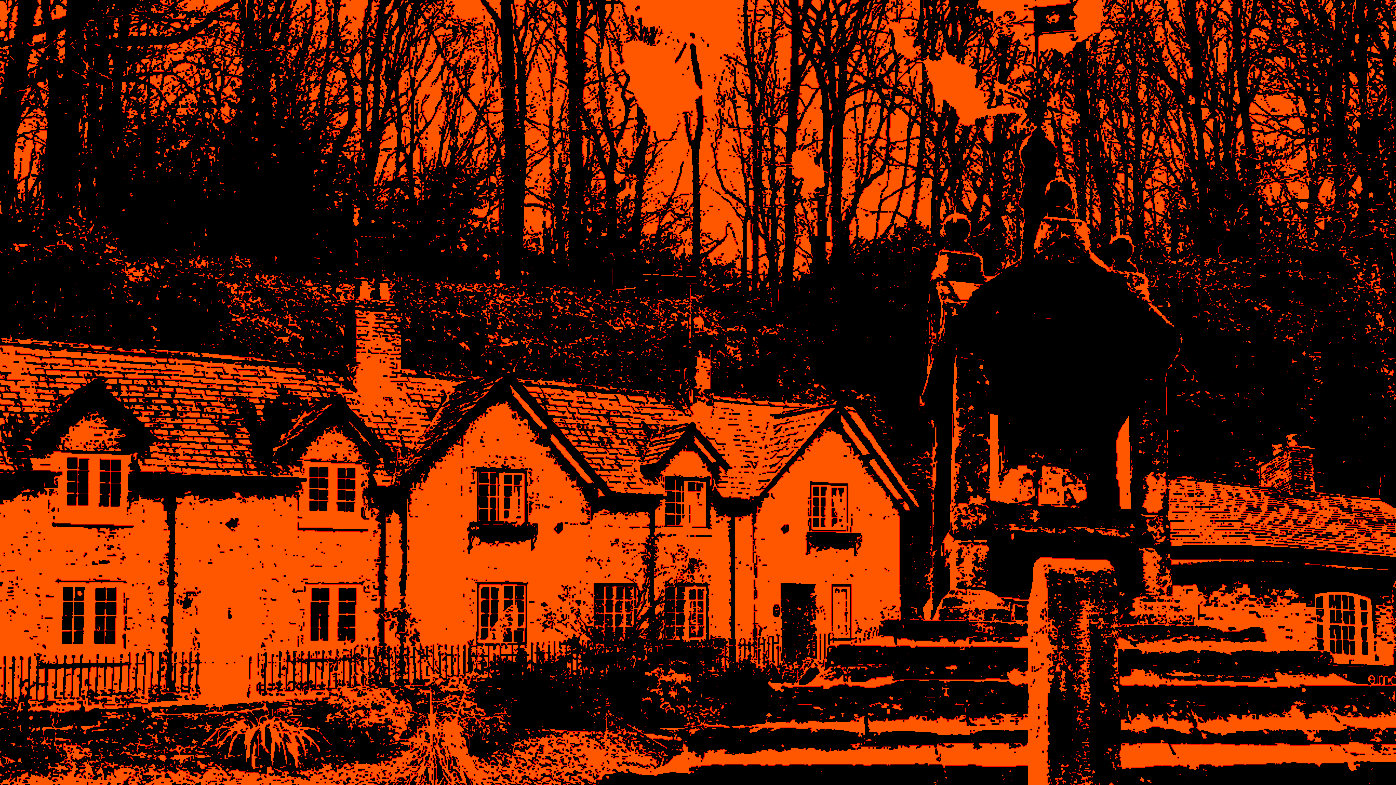
Lymm Cross rises from the modern village square like a grubby, ancient menhir. It’s not a cross as such, but a stepped monolith bolstering a pavilion with clocks on either side. At the foot stand mossy stocks where for centuries errant villagers were publicly humiliated.
It’s a cold, grey afternoon. From the sandstone outcrop of the only Grade I listed monument in Warrington, people eat lunch inside a bohemian cafe, an art shop exhibits gaudy paintings, and workmen drill up a tremendous din opposite The Cross Pharmacy.

Agitators gathered at Lymm Cross on a bitter January 16th in 1817 to voice their discontent. The protestors – branded thieves, vagabonds, and drunkards by the newspapers – opined on political and socio-economic issues affecting the labouring classes. These included poverty, enclosure, the mechanisation of textile production, universal suffrage, the Corn Laws, and ruthless penalties for poaching. We’ll never know truly how many participated in the uprising, but at least 50 were reported in attendance.
Although the Napoleonic Wars had ended, England was far from peaceful. Dubbed the year without a summer, 1816 was marked by economic distress, mass unemployment, and ruined harvests due to the eruption of Mount Tambora in Indonesia.
Months before the Lymm assembly, radical reformer Henry Hunt addressed Spa Fields, Islington decrying the evils of high prices and over-taxation. Twice he attempted to deliver a petition to the Prince Regent and was denied entry. The rout indignantly reconvened on December 2nd, attempting to seize the Tower of London, raiding a gunsmith’s shop before exchanging fire with royal troops.
More notorious than the uprising, Lymm has a dinosaur footprint preserved in a sandstone slab on display beside Lower Dam. The glass is so filthy and crazed I can barely make out its shape. A Liverpudlian couple next to me moan about the prehistoric disappointment; we joke that a worker probably slipped on drying concrete and the council framed it as an archaeological discovery.

“One can safely say it wasn’t the landowning class,” responded Roger, sat on a stackable chair in front of a scale dinosaur statue. “It would have been the suffering poor who were present at the protest.”
“The indigent,” Alan chimes in, “people so impoverished they needed a new word.” Alan relaxes in his chair positioned by the milk urn and fake vegetable stand outside a replica shopfront in Lymm Heritage Centre, his leather jacket unzipped. Beside Roger in his scratchy Fair Isle jumper, the two volunteers look an impressive double act.
While the mills in nearby Manchester were displacing skilled handloom weavers with factory technology and formerly rural areas such as Angel Meadows were being converted into slums, Lymm was an agricultural settlement with a population of 2000.
The Enclosure Act was effectuated locally in 1765, consolidating power to landowning families. “Not that it changed much,” Roger rightly notes, “most land was already enclosed by this point, except the marshy areas which were repurposed for agriculture.”
“Now Manchester had a growing population,” Alan adds, “Lymm’s potatoes were feeding them.”
Far removed from the plight of the working masses, Trafford Trafford Esquire of Oughtrington Hall earned his cartoon villain appellative by being the community’s de facto spokesperson. Coming from a slave-owning family, Trafford saw it as his civic duty to sit in judgement of his fellow man as a magistrate. Anxious to prevent a French Revolution happening in England, the establishment vehemently quashed any agitation. Lord Sidmouth infamously suspended habeas corpus in 1817, allowing authorities to charge without trial if people were suspected of sedition. Being the industrial centre, unrest in Manchester generated the most intense fears of revolution.
“The newspaper reports from the protest make the Daily Mail look moderate,” Alan laughs. “The Chester newspaper called on the constable to ‘detain a few of them’ on the flimsy basis they may be connected with petty crime along the canal bank.”
Alan suddenly had to run off to the pharmacy, so I was left with Roger who enlightened me to the identity of the “apothecary” mentioned in the reports. “It’s Joseph Healy,” he tells me, one of the Manchester Radicals wounded at Peterloo. “His father was a ‘cowleach’, which was a primitive sort of vet, and he passed the knowledge down to his son. But he doctored men and women too, you know, there wasn’t much choice sometimes if you needed a tooth removed.”
A second meeting was planned in Lymm but after the first one Trafford made considerable efforts to suppress dissent. On January 30th 1817 a meeting was held at the school attended by “numerous and respectable” peoples who expressed their regret at “the mischievous endeavours of designing and disaffected people to create discontent and disorder among the labouring classes in this parish.” In a significant move, the meeting voted to immediately appoint and swear in 20 special constables so that “if rebellion should dare to raise its crest it may be cast down.” Threatened with such strong military presence, the second meeting never went ahead.
“Lymm was on the fringe of everything,” Alan points out, animated on his return from the pharmacy, “not a satellite of Manchester.” But it was connected through the ship canal which brought fustian over to local cottages and workshops. The fustian industry didn’t pump thick smoke into the countryside but did involve 12-hour working days for children.
“There’s a lot of community events here. They’re always well supported,” Roger asserts. “We’ve got the annual festival,” Alan chimes in, “the big Historic Transport Day. Rushbearing which is still going, the Lymm May Queen which is still going, and soulcaking which is still going and the oldest one of the lot.”

“The thing is, so many of the traditions died out elsewhere partly because of the First World War, but also because industrialisation saw them off and we didn’t have that level of industrialisation. Here at the heritage centre, we keep traditions going so newcomers can learn about where they live.” They show me a side room packed to the rafters with exhibits. “The museum and heritage centre is so… expendable.” Outside, rain unexpectedly tears through fustian sky.
In the Victorian period, this picturesque village became a popular residence for merchants, commencing Lymm’s transformation into an affluent commuter spot, where property prices continue to drive out local families.
As I waited over an hour for the missing bus – heavy rain turning to hail, pelting the village square – I wondered how many protesters could have gathered at the Cross. Who could weather unpaid time off work; were the gentry nearby monitoring them, scanning faces who they would later reprimand, go out of their way to prosecute?
I was starting to agree with something Alan said earlier: “Did the people here feel disaffected? Did they buy the arguments for Reform? To us, now, they’re so obvious but when you take that to the present day – there are so many obvious arguments for what is wrong with the government structure in this country today and yet the majority of the population are sold by the government that this is the best way. So we’re easily convinced, I think, sometimes. You look back and think: ‘Why didn’t you do more?’ But it was so hard for them.”
You must be logged in to post a comment.